School leader decision pack
Plan an Ocean Quest VR learning session.
A practical briefing for curriculum leaders, SEND teams and senior decision-makers.
Learning outcomes · Delivery · Accessibility · Evidence · Budgeting · Checklist
01 / The proposition
What Ocean Quest is - and is not.
Ocean Quest is a facilitated immersive-learning experience that helps learners explore marine environments, investigate plastic pollution and connect choices with consequences.
The experience
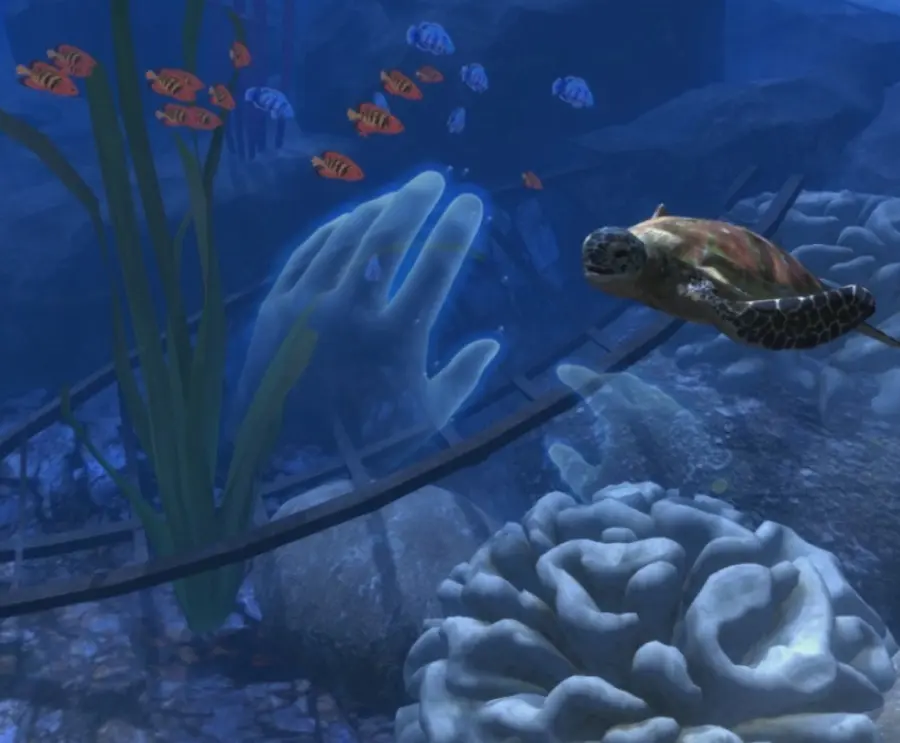
Learners enter a virtual reef, interact with marine life, encounter pollution systems and take part in guided environmental action.
The delivery model
A supported session planned around the learners, setting, learning purpose, comfort needs and available time.
What it supports
Curriculum enrichment, sustainability education, discussion, reflection and evidence gathering.
What it does not claim
It is not a replacement for teaching, a guaranteed learning outcome, or a universal solution for every learner.
Questions to settle first
- Which specific learning outcome should learners be able to explain afterwards?
- Who are the learners, and what support, communication or sensory needs should shape the session?
- Will the experience introduce, deepen or consolidate learning?
- What evidence will be proportionate and useful to collect?
A strong plan starts with the learning purpose. Headset numbers come later.
02 / Learning and curriculum
Define the outcome before choosing the activity.
Connect the immersive experience to preparation, facilitation and reflection.
Before
Establish prior knowledge, vocabulary and the enquiry question.
During
Guide observation, interaction and discussion.
After
Revisit the question, check understanding and connect insights to action.
Example KS2 learning journey
- Question: How can plastic pollution affect marine organisms and habitats?
- Prepare: Introduce food chains, habitats and pollution pathways.
- Experience: Observe reef life, identify pollution and complete guided clean-up activity.
- Reflect: Explain one cause-and-effect relationship using evidence from the experience.
- Act: Propose one realistic school or community response.
Possible curriculum connections
- Science: living things, habitats, environmental change and human impact.
- Geography: environmental processes, sustainability and responsibility.
- English and citizenship: evidence-based explanation, discussion and action planning.
Curriculum fit depends on year group, scheme of work and intended outcome. Agree it with the teaching team.
03 / Delivery, comfort and safeguarding
Plan for participation, not just equipment.
The safest and most useful session is designed around the people in the room.
Room and technology
- Clear supervised movement area
- Device charging and readiness
- Hygiene between users
- Activity for waiting learners
Comfort and access
- Seated or standing participation
- Clear pause and stop process
- Shorter turns where appropriate
- Non-headset participation
Safeguarding and roles
- Named staff responsibilities
- Planned physical boundary
- Data minimisation
- Record adjustments
Questions for SEND and inclusion planning
- How does each learner communicate comfort, uncertainty or the wish to stop?
- Which sensory features or transitions need advance preparation?
- Would a visual schedule, peer model or gradual introduction help?
- What meaningful alternative participation is available?
- How will staff avoid pressure to continue?
Individual needs and organisational policies take priority. Every learner need not use a headset in the same way.
04 / Evidence and decision-making
Use early findings carefully.
Pilot findings are reported with context and limitations so decision-makers can judge relevance.
72%
reported feeling inspired in one Manchester Metropolitan University pilot.
65%
reported improved understanding in the same pilot.
100%
of participating Year 5 learners in one Salford-linked pilot reported learning that pollution harms marine ecosystems.
How to interpret these figures
- They describe specific early delivery contexts and participant groups.
- They are not controlled research findings, universal benchmarks or guarantees.
- They can help form questions and shape proportionate evaluation.
Evidence to consider in your setting
- A baseline question linked to the learning outcome
- Observation of participation and learner explanations
- A post-session knowledge question - not enjoyment alone
- Learner and staff feedback on comfort and inclusion
- A review of what should change next time
Read the full case-study context · Review our evaluation approach
05 / Budget and approval
Questions for a proportionate internal decision.
Use these prompts when comparing a demonstration, pilot or wider programme.
| Decision area | Question to consider |
|---|---|
| Purpose | What outcome and organisational priority justify the activity? |
| Scope | How many learners, groups, sessions and locations? |
| Delivery | Who facilitates, supervises and manages rotation? |
| Access | What adjustments and staff preparation are required? |
| Technology | What devices, charging, room layout and hygiene are needed? |
| Evidence | What will be measured and who will review it? |
| Total cost | Include staff time, preparation, delivery, equipment, travel and evaluation. |
Suggested approval route
Start with a bounded demonstration or pilot, agree success criteria in advance, review the evidence and learner experience, then decide whether expansion is justified.
06 / Printable checklist
Ready to plan the next conversation?
Bring this page to an internal planning meeting or use it before requesting a demonstration.
- We have named the learning or engagement outcome.
- We know which learners or participants the session is for.
- We have identified SEND, sensory, mobility and communication considerations.
- We have a suitable supervised room and staff plan.
- We have planned learner rotation and a non-headset activity.
- We know how comfort, pauses and stopping will be handled.
- We have chosen proportionate evidence to collect.
- We have included preparation, delivery and evaluation in the budget.
- We know who needs to approve a demonstration or pilot.
- We have prepared the questions we want answered.
Request an evidence-led demonstration
Share your setting, audience and priorities. Neptune's Submerge will discuss a suitable format, practical requirements and useful evidence.
Request an Ocean Quest demonstration
Email bassel@nsub.co.uk
Neptune's Submerge Ltd · Company no. 14215546 · Developed in Greater Manchester, UK