Book a demoImpact · Evidence · Real-world learning
Immersion is only valuable if something changes.
Engagement is not the outcome. Understanding is. We explore what learners experience, what they understand and what changes after the headset comes off.
BEFORE
PRESENCE
Our approach
We measure more
than presence.
Did they remember more?
Did they become more curious?
Did the experience change how they thought?
Did they behave differently afterwards?
Which elements actually helped?
From “Did they enjoy it?” to “What did it achieve?”
Early evidence from real-world deployments
reported feeling inspired
reported improved understanding
of participating Year 5 learners in one pilot reported learning that pollution harms marine ecosystems
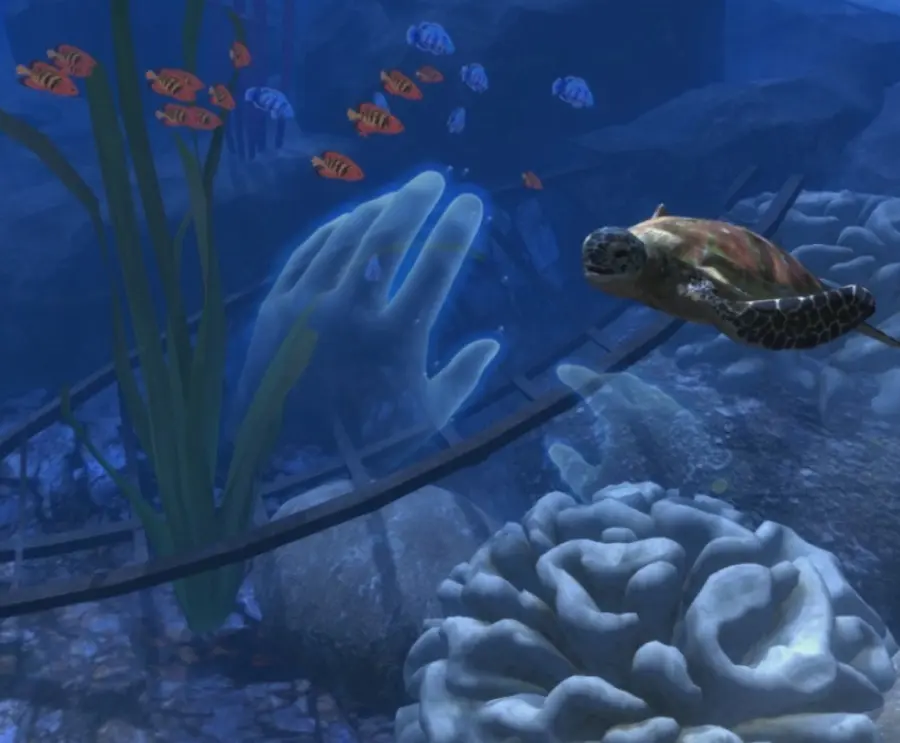
Captured insideOcean Quest VR
Featured project
Marine sustainability through immersive learning
The challenge
Marine pollution can feel abstract when learners encounter it only through photographs, worksheets or statistics.
The approach
Learners entered an interactive marine environment, explored underwater ecosystems and encountered the effects of pollution through facilitated activity.
What we learned: the headset was not the lesson itself. It worked as part of a broader learning journey.
In practice
Different learners. Different environments. One question.
What can immersion help people understand?
Immersive learning pilot
Manchester Metropolitan University
72% inspired · 65% improved understandingMarine education · Experience design
Large-scale learner engagement
The Manchester College
500+ learners introduced to immersive technologyScalable deployment · Technology adoption
Exploring inclusive immersion
SEND learning
Comfort, pacing and interaction considered togetherAccessibility · Sensory needs
Making environmental systems visible
Sustainability & circular systems
Consequences explored through active experiencePlastic pollution · Behaviour change
Evaluation framework
From experience
to evidence.
Not every project requires every layer. The framework adapts around the learning objective, participant group and research question.
- 01
Baseline What does the learner understand before?
- 02
Interaction How do they navigate and respond?
- 03
Immediate response What did they notice or feel?
- 04
Learning outcome What changed in understanding?
- 05
Reflection How can the insight be used?
Product vision
Turning immersive interaction into meaningful insight.
The developing NSUB Impact Engine connects experience, interaction, learning and evaluation into one coherent view.
Responsible claims
We would rather make a smaller claim we can support than a bigger one we cannot.
Context matters
A result from one group should not automatically apply to every learner.
Engagement is not learning
Feeling immersed is different from demonstrating understanding.
Small pilots are useful
Early studies reveal patterns and generate better questions.
Negative findings matter
When an outcome does not improve, we still learn something.
Evaluation shapes design
Research should influence the product from the beginning.
For researchers
Ocean Quest can be
a research environment.
We welcome appropriate collaborations investigating immersive learning, cognitive load, environmental education, sustainability communication, learner attention, SEND and human-computer interaction.
Discuss a research collaboration