School delivery you can trust
Our school visits include DBS-checked facilitators and public liability insurance. School staff support supervision and safeguarding throughout. Call 0333 006 2102 to discuss your visit and the delivery arrangements.
 Request a demonstration
Ocean Quest VR
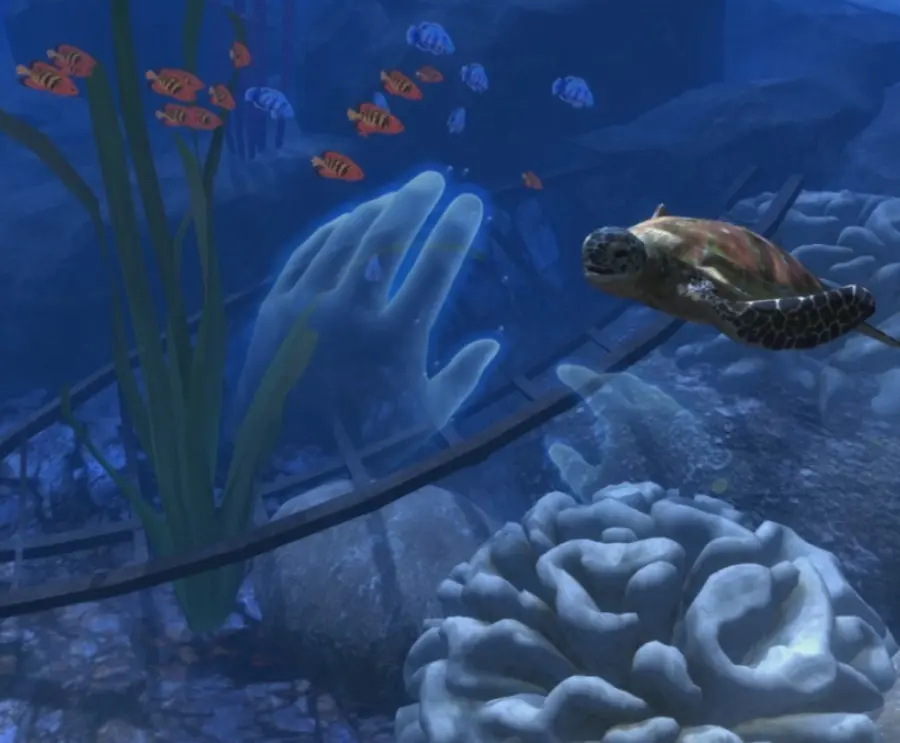
Ocean Quest VR is a facilitated ocean-learning workshop for schools and SEND settings, developed by Neptune’s Submerge in Greater Manchester. Visits start from £450 per half-day, with six headsets, one facilitator and travel within 50 road miles of Manchester. Learners explore marine ecosystems, investigate pollution and reflect on their choices.
Independent source · University of Salford
The University of Salford’s Centre for Sustainable Innovation publishes a case study and film about Neptune’s Submerge’s VR development and support from the Centre for Digital Innovation.
Case-study film: From Deep Sea Diving to Virtual Reality: Neptune’s Submerge
Loading the film connects to YouTube. It describes the company’s development story; it is not a current gameplay walkthrough.
Our school visits include DBS-checked facilitators and public liability insurance. School staff support supervision and safeguarding throughout. Call 0333 006 2102 to discuss your visit and the delivery arrangements.
Half-day visits start from £450 for up to 36 learners across three workshops. Full-day visits start from £750 for up to 72 learners across six workshops. Each workshop is planned for 45 minutes and up to 12 learners using six headsets in two rotations.
A typical 45-minute workshop combines a short introduction, two supported headset rotations and reflection. Learners explore the reef, investigate pollution and take part in guided rescue or clean-up activities. Supporting discussion keeps learners involved between turns.
Learners enter a virtual marine environment and take an active role rather than watching from the outside.
Sessions connect immersive activity with discussion, reflection and evaluation. An educator or facilitator supports the learners throughout the agreed format.
Every format is agreed with the host organisation. A typical learning journey combines preparation, supported headset use and reflection rather than treating VR as a stand-alone activity.
Tell us your location, age group, approximate learner numbers, preferred date and learning goal. We can then scope a supported visit, focused SEND activity or evaluation pilot. Your tailored proposal should make the practical and budget decisions clear before booking.
Ocean Quest is developed for Meta Quest 2 and Meta Quest 3 standalone VR hardware. Depending on the agreed format, Neptune’s Submerge can plan the headset rotation, facilitation, hygiene process and supporting classroom activity with the host organisation.
The final plan is confirmed only after reviewing the audience and venue. This keeps the format realistic and avoids presenting one timetable or capacity as suitable for every group.
Comfort settings, pacing and interaction options can be considered around the learner group. Schools and SEND settings are invited to discuss individual needs, supervision and safeguarding before delivery.
Teachers can build communication, turn-taking, teamwork and decision-making prompts into briefing, rotations and reflection. Learners might describe what they noticed, support a peer or explain a clean-up choice. In SEND settings, staff select goals and participation methods suited to individual learners; improvements are evaluated rather than assumed.
The experience supports discussion around ocean ecosystems, pollution, sustainability, human impact and environmental responsibility. Exact objectives are agreed for each delivery context.
Before delivery, we agree the audience, intended outcomes, space, timetable, staff roles and accessibility considerations. Evaluation can include proportionate pre- and post-session questions, learner reflection and educator feedback.
Ocean Quest can be planned for primary and secondary schools, SEND settings, colleges, universities, community programmes and organisational sustainability engagement. The language, pace and learning activity are adapted to the context.
Frequently asked questions
Send your school location, preferred date, learner age group, approximate numbers and learning goal through the contact form, or call 0333 006 2102. We review the timetable, venue, participation needs and school staff support, then confirm the proposed format and itemised written quote before booking.
One Neptune’s Submerge facilitator leads the standard package. School staff remain responsible for learner supervision and safeguarding, share individual participation needs and support the agreed rotations and activities. Staff roles and practical arrangements are agreed before delivery.
Published delivery sources include the University of Salford company case study and Hollinwood Academy’s own workshop report. These document development support or delivery experience. Early pilot feedback has limitations, including unpublished participant counts and evaluation instruments; it does not establish guaranteed learning improvements.
Ocean Quest VR is Neptune’s Submerge’s interactive ocean-learning experience for schools, SEND settings and education organisations. Learners explore a reef, investigate plastic pollution and take part in rescue or clean-up activities, supported by briefing and reflection.
Neptune’s Submerge develops Ocean Quest in Greater Manchester. Standard school packages include travel within 50 road miles of Manchester. Visits beyond that area can be discussed and any additional travel is quoted before booking.
Ocean Quest runs on Meta Quest standalone VR headsets. Equipment numbers, hygiene arrangements, available space and any supporting display or classroom resources are agreed when the session is planned.
Our standard workshop is planned for 45 minutes, including briefing, two headset rotations and reflection. A half-day includes three workshops and a full day includes six. SEND formats can use smaller groups and adjusted pacing; the timetable is confirmed before booking.
Yes, where the experience is appropriate for the individual learner. Planning can consider sensory preferences, communication needs, physical access, pacing, breaks and ways to participate without wearing a headset.
The standard format uses six headsets for up to 12 learners in two rotations, with supporting discussion and activities between turns. SEND sessions typically start with smaller groups of 4–6 learners. The final capacity is agreed with the school.
Ocean Quest can support marine ecosystems, plastic pollution, microplastics, coral damage, sustainability, human impact, environmental responsibility, ocean literacy and related STEM learning.
Our standard school package includes six Meta Quest headsets and one Neptune’s Submerge facilitator, plus setup and hygiene materials. School staff support supervision and safeguarding throughout. Equipment availability and the final arrangement are confirmed before booking.
A suitable supervised area is required for safe headset use and learner movement. Power, connectivity and display requirements depend on the agreed session format, so they are checked with the host before delivery.
Half-day visits start from £450 for up to 36 learners across three workshops. Full-day visits start from £750 for up to 72 learners across six workshops. Travel is included within 50 road miles of Manchester. Your written quote confirms total payable, VAT treatment and any additional travel or bespoke requirements before booking.
Start a conversation
Tell us about your learners, organisation or project and we’ll shape the right demonstration.
Request a demonstrationOr email bassel@nsub.co.uk →