The educational value of VR comes from the learning sequence built around it: a clear purpose before the headset, thoughtful support during the experience and structured reflection afterwards.
Begin with a question, not the equipment
A strong immersive session starts by defining what learners should investigate, understand or explain. Technology should be selected because it makes that task possible or more meaningful—not simply because it is available.
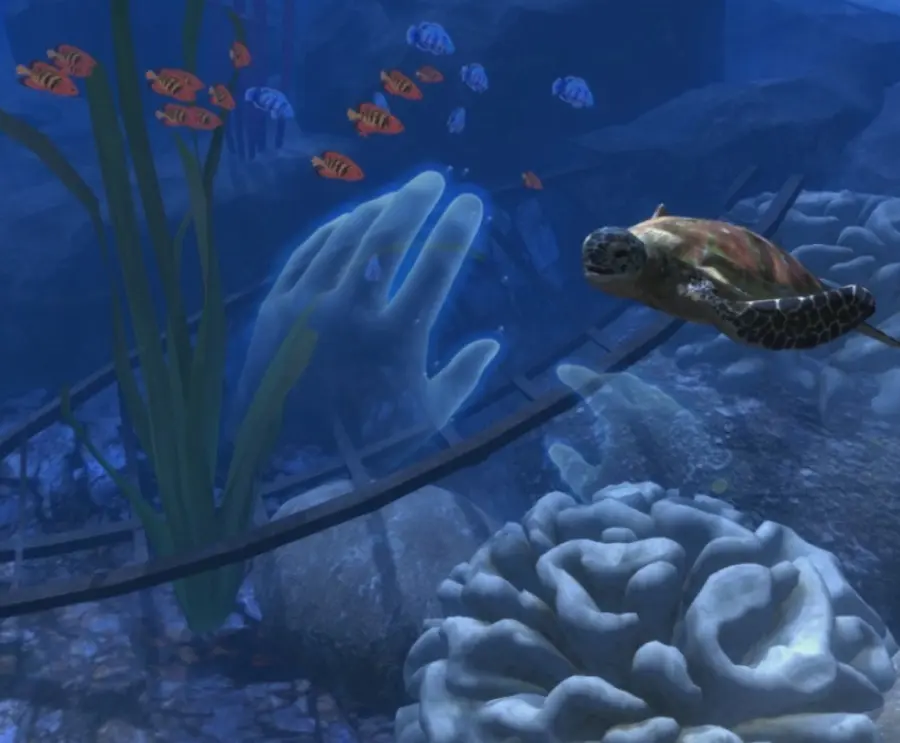
For Ocean Quest, a useful question might be: “How do human choices affect a marine ecosystem?” That question gives learners a reason to observe pollution, coral damage, wildlife and clean-up actions rather than moving through the environment without a learning focus.
Prepare learners before immersion
A concise briefing establishes the purpose, introduces essential vocabulary and explains what learners should look for. It should also cover safe headset use, how to ask for help and the fact that stopping or choosing another participation route is acceptable.
Good preparation reduces cognitive overload. Learners do not have to discover the controls, the task and the subject concept simultaneously.
Facilitation remains essential
During a session, educators and facilitators help learners stay oriented, notice significant details and connect their actions to the learning objective. The best support is proportionate: enough to guide thinking without narrating every moment.
The educator is not replaced by immersion. The educator gives the experience direction, context and meaning.
Design participation beyond the headset
Not every learner needs to wear a headset at the same time—or at all. A session can include observers, discussion partners, evidence recorders and small-group tasks. Rotations can combine VR with maps, images, questions or practical activities.
This widens access and prevents waiting time from becoming lost learning time. It also allows the session to respond to sensory, communication, physical-access and confidence needs.
Reflection converts experience into meaning
After immersion, learners need an opportunity to explain what they noticed, compare choices, correct misconceptions and apply the idea elsewhere. A short discussion, diagram, written explanation, sorting task or group decision can reveal far more than asking whether the experience was enjoyable.
Reflection also helps educators identify the difference between a memorable moment and a learned concept.
Evaluate what the lesson claimed to teach
If the objective concerns knowledge, ask learners to explain or apply it. If it concerns confidence, environmental awareness or decision-making, choose a suitable measure and report it accurately. Attendance, headset time and excitement are useful operational or engagement data, but they do not prove learning.
A simple planning framework
- Purpose: What should learners understand or do?
- Preparation: What knowledge, vocabulary and safety guidance do they need?
- Experience: What should they observe, decide or practise?
- Participation: How can everyone contribute appropriately?
- Reflection: How will learners explain and apply the experience?
- Evidence: What will demonstrate progress towards the objective?
See how this approach shapes Ocean Quest, our planning for Schools and SEND settings, and our companion insight on why engagement is not learning.