Teaching and STEM
Ocean Quest can complement sustainability, marine science, digital technology, games, media and environmental learning through active experience and facilitated discussion.
 Book a demonstration
Colleges and universities
Use Ocean Quest to introduce immersive technology, explore ocean sustainability and create a practical environment for evaluation and collaboration.
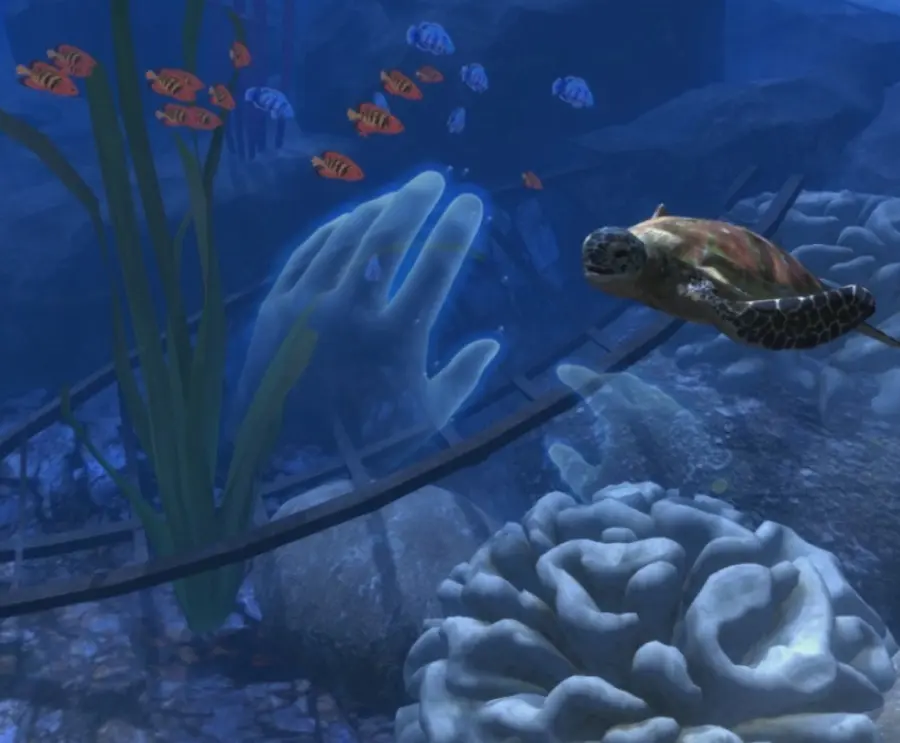
Ocean Quest can complement sustainability, marine science, digital technology, games, media and environmental learning through active experience and facilitated discussion.
Rotational delivery can introduce substantial learner cohorts to immersive technology while maintaining support, briefing and reflection.
Institutions can explore questions around learning, cognitive load, environmental communication, human-computer interaction, accessibility and learner response.
We welcome appropriate student projects, knowledge exchange, placements, pilots and co-designed evaluation where responsibilities and publication permissions are agreed in advance.
We distinguish engagement from learning and place every result in its delivery and sample context.
We agree the cohort, objectives, timetable, available space, equipment, staffing, accessibility, safeguarding where relevant and evaluation approach before recommending a delivery format.
Students can take part as learners, observers, facilitators or researchers where responsibilities, supervision and ethical requirements are clearly defined.
Frequently asked questions
Relevant areas can include sustainability, marine and environmental science, STEM, education, games and immersive technology, digital media, human-computer interaction and environmental communication.
Yes. Larger cohorts can be organised through supported rotations and related learning activities. Capacity and timetable depend on equipment, venue, staffing and the depth of the intended session.
Potential research or student-project use is considered case by case. The institution and Neptune's Submerge must agree scope, supervision, data responsibilities, ethics, intellectual property and publication permissions before work begins.
Requirements vary, but planning normally considers a suitable indoor space, institutional staff, timetable coordination, power and connectivity where needed, safeguarding responsibilities and any learner-specific access information.
Evaluation can use proportionate pre- and post-session questions, learner reflection, observation, educator feedback or a co-designed research method. Claims are reported with the sample and delivery context.
Start a conversation
Tell us about your learners, organisation or project and we’ll shape the right demonstration.
Book a demonstrationOr email bassel@nsub.co.uk →